“I will never forget where I was when…”
This is a phrase that almost everyone uses to recount some historic, and invariably, tragic event, that forever alters the trajectory, not only of our individual lives, but also that of our countries, our world, and increasingly, our very existence on the planet.
The event itself will vary based upon the age of the speaker. For my grandparents, it was the bombing of Pearl Harbor; while those of my parents’ generation were haunted by the assassination of JFK. For me and my late-Baby Boomer/early Generation X cohorts, September 11, 2001 was our “never forget” moment. 
Despite these tragic events, perhaps the silver lining to all of these gathering storm clouds was their ability to unite all Americans, regardless of color, religion, and ethnic background as we shared in the collective shock, outrage, and grief in a truly united fashion. Unfortunately, however, the latest national “tragedy” is different for two important reasons. First, not everyone agrees that it is indeed a “tragedy” with slightly less than half of the nation either celebrating it as a victory for the struggling working class or at the very least, the decision to roll with the (perceived) “lesser of two evils.” Second, and perhaps more damaging, however, is the fact that this event has driven a larger wedge between Americans of various stripes than all of the previous tragedies combined. Election night, November 7, 2016 has become an important turning point in the future of our world. For some, the election of President Donald J. Trump seems to represent cause for celebrations that are nearly the equivalent of those that accompanied the Apollo moon landing or the news of the death of Osama Bin Laden. Sadly, for the rest of us, it is our Pearl Harbor, our 9/11.
What some have dubbed “The Trump Effect” has expanded the ideological chasms to breadths rivaled only by those of the Civil War when the country literally split into two separate nations. Much of the discussion and debate so far has included speculation about the “why” of this course of human events. Was it a frightening brand of Populism born out of the frustrations of poor and working class whites who felt they needed to send a message to the political establishment or perhaps it was the inevitable racist backlash that occurred in response to the audacity of a black man who dared to run and win the right to occupy the Oval Office for an astounding (in the minds of some) eight years? Additionally, Americans who do not celebrate a Trump presidency continue to theorize about “how” this surreal phenomenon came to be. Was it something as simple as voter apathy formed in the minds of an increasingly disillusioned electorate, whose view of both candidates as equally corrupt and undesirable led them to simply “sit this one out?” Or was it something more sinister, such as a well-orchestrated plot hatched by a foreign government to place a puppet leader into the most powerful office in the world?
While these questions are among the most obvious so far, perhaps there are others that are of far greater importance, such as, “What happens next?” Do we attempt to close the divide? Is that even possible, and if not, what can we do to peacefully coexist is this strange new reality? One of my greatest fears is that we have failed to learn from the mistakes made in the aftermath of our country’s last great divide. Too often we seem to leave the responses to national tragedies half-finished in a way that prevents real healing from ever being accomplished. Following the Civil War, Reconstruction began in the midst of continued division, with some desiring to punish the former Confederate states and others simply anxious to rebuild the nation by quickly plastering over the deep wounds and ugly scars of a bloody and divisive war.
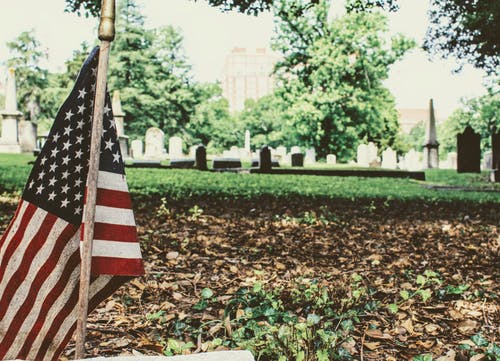
But with woefully inadequate plans to prepare freed slaves for life after emancipation and no strategies to acknowledge and deal with deep levels of resentment still smoldering in the South, the wounds never healed. Instead, they festered through one hundred years of Jim Crow, accompanied by the rise of the Ku Klux Klan and the unspeakable violence, in the form of voter suppression, cross burning, and lynching, among others ,designed to hold those viewed as the “other” firmly in their disadvantaged places.
Perhaps, most astonishing is the fact that even now, some four centuries after the first slaves arrived in the American colonies, our country still remains either unable or unwilling to tend to these old wounds even as the United States teeters precariously on the verge of entering a state of septic shock which could very well prove fatal. The War on Drugs that has caused a disproportionate number of Black and Latino citizens to fill our prisons and the alarming number of instances of police brutality against young men of color are evidence of the life-threatening poison that continues to spread. When these sickening realities are then coupled with the rabid and often paranoid assertions that “caravans” of immigrants are invading our southern borders and must be stopped by “any means necessary”, I wonder whether the untreated infection of our past is now manifesting itself in a fever-induced delirium that will kill us all, not only figuratively, but literally as well.
There is a popular commercial that employs a catchy little tune paired with a cheerful refrain: “Let’s work together. Come on, come on, let’s work together.” Rather than calling for the construction of walls, the abandonment of our European allies, and the continuation of the ever-deepening divide of extreme political and social ideologies, perhaps we need to find a way to heed the advice of this simplistic advertising jingle. For if we don’t, I genuinely fear that the damage caused by our decay as a nation will soon reach the point of no return and the next generation will say, “I will never forget where I was when the United States ceased to exist.”
 quietlyradical