“I don’t care too much for money, ‘cause money can’t buy me love” (Beatles).
“For the love of money is the root of all evil: which while some coveted after, they have erred from the faith, and pierced themselves through with many sorrows” (King James Bible, 1 Tim. 6.10).
Whether you agree with both of these sentiments or neither, there is no doubt that society’s relationship with money is a complex one. I can vividly remember being taught as a child that, “Money does not bring happiness” and reading the story of King Midas and the Golden Touch, which served as the ultimate cautionary tale extolling the perils of greed. Yet these days it seems as though everything, from political philosophies, to personal relationships are unduly (and often negatively) impacted by the relentless pursuit of money, possessions, or both. We need only look at the most prevalent media headlines to find concrete evidence of this. 
Lack of Gun Control
Take the debate over gun control in the United States, for example. Since the Columbine High School shooting, which took the lives of 13 people in 1999, it seems that mass shootings in the United States have continued to occur with ever-increasing regularity. Exact numbers are difficult to pinpoint, however, because according to gun researcher Garen Wintemute of the University of California at Davis, there is no single legal definition of what constitutes a mass shooting (Nichols). If we use media reporting as a guide, it seems that a minimum of three deaths, in which the victims are not personally known to the shooter, are required before a tragedy is generally coined as a “mass shooting.” Sadly, many of these tragedies fade all too quickly from our collective memories. While most can easily recall Columbine and whatever is the most recent incident which, as of this writing, is (in the United States) the Marjory Stoneman Douglas High School shooting with 17 killed and 17 wounded more (Fleshler), countless other incidents have faded from memory. Does anyone still remember the killing of six Amish schoolgirls in Nickel Mines, Pennsylvania in 2006 (Kocieneiewski and Gately) or the Army officer who killed twelve people at Fort Hood in 2009 (McFadden)? Does anyone recall that the horrific Sandy Hook Elementary School murders in 2012 (Barron) were preceded by two other mass shootings: one at an Aurora, Colorado movie theater (Bustillo, Banjo and Audi) and the other at a Sikh temple in Wisconsin (Memmott) just a few months before? By even the most conservative estimates, the United States has experienced at least thirty-five mass shootings in the past twenty years and yet our gun control laws have remained largely unchanged. Why? Gun enthusiasts often cite the strong desire to protect their Second Amendment rights and I have no doubt that most are sincere in their convictions. However, it cannot be denied that gun manufacturing and sales represent big business in the United States with combined revenues of $28 billion in 2018 (MacBride). Sadly, it seems that our own government considers the lives and safety of the American public as being worth far less.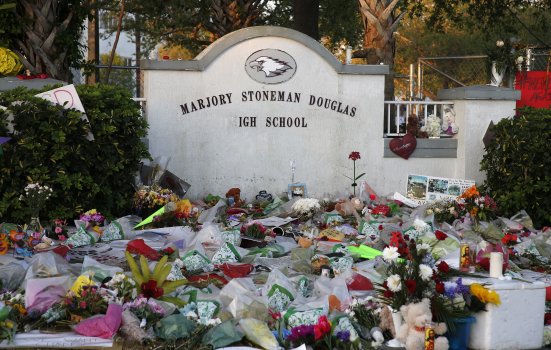
Immigration Reform
Consider also the ongoing debate surrounding immigration reform and the infamous southern border wall.  Despite President Trump’s shameless fear-mongering regarding the “caravans” of illegals supposedly flooding over the border in droves, the main concerns of most average Americans seem to be that 1) immigrants are “stealing” valuable American jobs and 2) illegal immigrants are bleeding American taxpayers dry through their abuses of our generous welfare programs. Both of these arguments clearly reveal that protection of financial assets is overshadowing the virtues of showing generosity and compassion toward our fellow human beings. The further irony, however, is that these fears are, in fact, baseless. For example, Dennis Nixon, CEO of International Bank of Commerce in Laredo, Texas, and a loyal Trump supporter, has shared his frustrations regarding labor shortages and his concerns about the shrinking U.S. workforce. In an interview with CNN Nixon stated, “We can see the positive effects of immigration in my home state of Texas…immigrants living in the Lone Star state help grow the economy by allowing native-born workers to specialize in communication-intensive jobs, while the foreign-born population is able to fill jobs that require more manual labor…” (Nixon). As for the myth that illegal immigrants are lured to the United States by the promise of generous and easily obtained welfare benefits, this is also simply not true. President Clinton’s’ 1996 welfare-reform law bars illegal immigrants from receiving benefits from programs such as Medicaid and SNAP, and even legal immigrants are subject to a five to seven year waiting period before being eligible to receive these benefits (Hing).
Slavery and the Native American Genocide
The “love of money” also contributed to two of the most shameful chapters in U.S. history: slavery and the displacement of the Native Americans. While many people associate these historical events with racism, the true origin was undoubtedly economic. Jenny Bourne of Carleton College writes that just before the start of the Civil War there were some 4 million slaves living in the American South with a market value of more than $3.1 billion (Bourne). Additionally, the free labor that enslaved people provided allowed not only the southern agricultural states to thrive but also provided cheaper raw materials, such as cotton, for northern textile manufacturers. While modern popular culture tends to enjoy portraying southern slaveholders as sadistic monsters, it might be more accurate to show that they were simply opportunistic businessmen who allowed their morality to take a back seat to their profit margins. 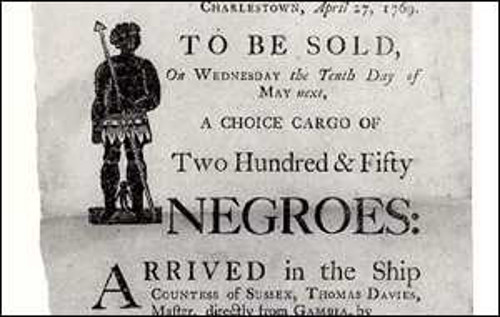 Moreover, while the buying and selling of human beings is beyond repugnant, it is also important to remember that Native Americans suffered even greater casualties as a result of the avarice of the U. S. government, which was eager to acquire the valuable land and natural resources on native lands in order to fuel 19th century westward expansion. While slavery was abolished in 1865, Native Americans continue to be exploited by greedy corporations even today. In 1887, the United States passed The Dawes Act, which privatized communally held Native American lands and divided them into smaller individually-owned allotments (Woodard). Companies keen to gain access to lands either ripe for agricultural development or containing valuable natural resources, such as timber or oil, were then able to unfairly coerce individual native landowners into unfavorable leasing agreements with non-natives. Unfortunately, the negative effects of the Dawes Act are still being felt by Native landowners today. According to an article in the magazine, In These Times, “… a court-appointed investigator found that Navajos were being paid $25 to $40 per rod (16.5 feet) for rights of way across their land…while similar land off the reservation garnered 10 to 20 times as much” (Woodard).
Equally unfortunate, however, is the fact that average American workers and taxpayers, distracted by short-term gains and our own relentless “love of money” are being blinded to the fact that only the richest 1% of Americans are benefiting from the current state of affairs. For example, Amadeo writes, “The unabashed quest for wealth above all other considerations was most likely the catalyst that caused a segment of the American public to support Ronald Reagan and his promises of smaller government in the form of tax cuts, reduced government spending, and fewer government regulations on businesses, collectively known as Reaganomics” (Amadeo). While Reagan’s supply-side economics was supposed to lead to job creation, increased demand, and higher income for all through the dubious “trickle-down” theory, there has yet to be any tangible examples of where this has actually occurred (Pettinger) and there are many who contend that these policies did more harm than good. For example, deregulation of the banking industry, which began in the 1980s, opened the door to the predatory lending practices that led to the housing crisis of 2008. The trickle-down theory might work if businesses were committed to reinvesting their profits for the purpose of creating jobs, but the sad reality seems to be that the burgeoning profits of corporate America are either funneled into the pockets of already wealthy company executives in the form of bonuses or distributed to stockholders as healthy dividends, resulting in ever-increasing income inequality. Finally, the reinvestment that does occur seems to be taking the form of technological advancements and increasingly automated workflows. Human workers are being displaced by machines, whose speed, accuracy, and ability to work without the need for salaries, benefits, or retirement plans, allow corporate executives and stockholders to retain the larger profits for themselves. 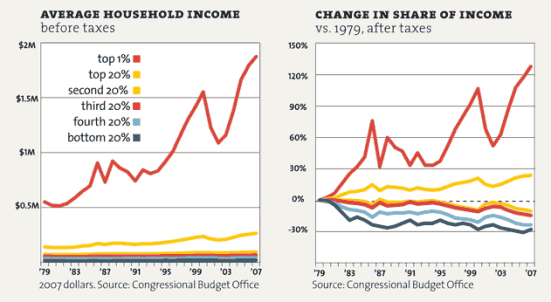
Our nation remains bitterly divided following the election of Donald Trump in 2016. An extensive analysis of Trump’s real estate empire, which was conducted by the Corporate Research Project, a non-profit organization, reveals a long history of misdeeds including housing discrimination, gaming licensing violations at his Atlantic City casinos, and misleading financial information provided to Trump Casino and Hotel investors, and well as OSHA violations on Trump property construction sites and Fair Labor Standards violations for employees at various Trump properties (Mattera). In spite of these facts, not to mention the President’s often crude language and bullying tactics, his staunchest supporters typically cite economic improvements as the reason for their ongoing support.
However, could our short-sighted habit of voting based on the impact upon our pocketbooks alone eventually backfire? What happens when immigrants decide that the U. S. is no longer an appealing option and the prices of our fruits, vegetables, fast food meals, hotel rooms, and landscaping services skyrocket as a result of the loss of cheap labor? What happens when the number of people over age 65 far outpaces the number of younger workers without the infusion of immigrant labor? What happens when the proliferation of unregulated gun ownership and the steady increase of gun violence begins to discourage tourism? What happens when our refusal to convert from fossil fuels to renewable energy because of the oil companies and their insatiable lust for profits pushes climate change to the point of no return? Ecclesiastes 5:10 says, “Whoever loves money never has enough; whoever loves wealth is never satisfied with their income. This too is meaningless.” I can only hope that America learns this lesson before it is too late.
Works Cited
Amadeo, Kimberly. What Is Reaganomics? Did It Work? 17 February 2019. 22 March 2019. <https://www.thebalance.com/reaganomics-did-it-work-would-it-today-3305569>.
Barron, James. “Nation Reels After Gunman Massacres 20 Children at School in Connecticut.” 14 December 2012. The New York Times. 25 March 2019. <https://www.nytimes.com/2012/12/15/nyregion/shooting-reported-at-connecticut-elementary-school.html>.
Beatles, The. “Can’t Buy Me Love.” By Paul McCartney. 1964.
Bourne, Jenny. “Slavery in the United States.” 26 March 2008. Economic History Association. Ed. Robert Whaples. 25 March 2019. <https://eh.net/encyclopedia/slavery-in-the-united-states/>.
Bustillo, Miguel, Shelly Banjo and Tamara Audi. “Theater Rampage Jolts Nation.” 21 July 2012. The Wall Street Journal. 25 March 2019. <https://www.wsj.com/articles/SB10000872396390444464304577538292604705890>.
Fleshler, David. “Latest Updates in the school shooting in Parkland, Florida.” 18 February 2018. South Florida Sun Sentinel. 25 March 2019. <https://www.sun-sentinel.com/local/broward/parkland/florida-school-shooting/fl-florida-school-shooting-main-20180215-story.html>.
Hing, Julianne. “The Truth About Immigrants and Public Benefits.” 29 June 2017. The Nation. 25 March 2019. <https://www.thenation.com/article/the-truth-about-immigrants-and-public-benefits/>.
Kocieneiewski, David and Gary Gately. “Man Shoots 11, Killing 5 Girls, in Amish School.” 3 October 2006. The New York Times. 25 March 2019. <https://www.nytimes.com/2006/10/03/us/03amish.html>.
MacBride, Elizabeth. “America’s Gun Business is $28B. The Gun Violence Business is Bigger.” 25 November 2018. Forbes. 25 March 2019. <https://www.forbes.com/sites/elizabethmacbride/2018/11/25/americas-gun-business-is-28b-the-gun-violence-business-is-bigger/#629675273ae8>.
Mattera, Philip. “Trump Organization: Corporate Rap Sheet.” 5 February 2017. Corporate Research Project. 22 March 2019. <https://www.corp-research.org/trump-organization>.
McFadden, Robert D. “Army Doctor Held in Ft. Hood Rampage.” 5 November 2009. The New York Times. 25 March 2019. <https://www.nytimes.com/2009/11/06/us/06forthood.html>.
Memmott, Mark. “Seven Dead in Shooting at Sikh Temple in Wisconsin.” 5 August 2012. The Two-Way. 25 March 2019. <https://www.npr.org/sections/thetwo-way/2012/08/05/158163953/breaking-news-shots-fired-at-sikh-temple-in-wisconsin>.
Nichols, Chris. “How is a ‘mass shooting’ defined?” 4 October 2017. Politifact California. 25 March 2019. <https://www.politifact.com/california/article/2017/oct/04/mass-shooting-what-does-it-mean/>.
Nixon, Dennis E. “Without immigration, our economy is in big trouble.” 4 April 2018. CNN. 25 March 2019. <https://www.cnn.com/2018/04/04/opinions/benefit-immigration-workforce-opinion-nixon/index.html>.
Pettinger, Tejvan. Trickle Down Economics. 9 November 2017. 22 March 2019. <https://www.economicshelp.org/blog/174/economics/trickle-down-economics/>.
Woodard, Stephanie. “How the U. S. Government is Helping Corporations Plunder Native Land.” 6 September 2016. In These Times. 25 March 2019. <http://inthesetimes.com/features/native-land-plunder-bureau-of-indian-affairs.html>.
 quietlyradical