The late 1960s were a turbulent time in the United States and as “colored” people, (“Black” and “African-American” hadn’t yet made their way into the popular vernacular) our parents did their best to raise my sisters and me within the delicately balanced framework of the hopefulness of the future juxtaposed against the discrimination and violence of the past. They never taught us to be fearful of white people – at least not explicitly; however, there always seemed to be a subtext of the need to exercise caution as we navigated our way in what perhaps our parents, and almost certainly our grandparents, regarded as the “strange new world” of Civil Rights era America. This “caution” manifested itself in a number of ways, however, the prime directive always seemed to be that we needed to be mindful of the fact that our actions were not entirely our own and that “colored people” everywhere could be negatively viewed or unfairly judged by the missteps of a few. Wishing to avoid having her children commit some terrible faux pas that would bring shame not only upon our individual selves or upon our family but upon the race as a whole, our slender, soft-spoken mother was a veritable drill-sergeant when it came to ensuring that our clothes were always clean and pressed, our hair had been whipped into submission, and our manners impeccable. Therefore, the power of “please” and “thank you” was instilled in my sisters and me almost from the time that we learned to speak and, “What’s the magic word?” became a gentle reminder employed by both our mother and our grandmother (who lived right next door) in those instances where my younger sister and I, at ages three and five respectively, sometimes experienced the inevitable “politeness lapse.”
“Nana”, our grandmother, was a complex person in many ways but she enjoyed a sense of style and panache that today would probably earn her the title of “the Black Martha Stewart.” We were not a wealthy or affluent family by any stretch of the imagination, but Nana, in her years of working as a housekeeper for wealthy and affluent white people, had carefully observed the style and grace exhibited by those white ladies and successfully adapted them to her home and budget. One of her most exquisite pieces was a small crystal candy dish, which mesmerized us, not only for the sweet treats it often held the delicate beauty of the dish itself.
One day, my little sister and I were visiting Nana and we happily discovered that the candy dish had been recently filled with the shiny, silver-wrapped Hershey’s Kisses  that we loved. Although she was two years younger, my sister Michele was always the bolder one and also a bit of a jokester despite her and so, without one shred of hesitation, she asked, “Nana, could I have some candy?” Being as much of a stickler for good manners as our mother was, Nana automatically replied, “What’s the magic word?” Michele furrowed her tiny little brow for just a moment when suddenly her eyes lit up and a wry smile began to form on her face. With a look of utter triumph, she excitedly shouted, “Abracadabra!”
Nana and I both fought hard to stifle our laughter (because laughing only encouraged Michele, and no one wanted that) and the “Abracadabra” moment became a part of our collective family lore. However, as we now live in a time, some fifty years later, where “please” and “thank you” seem to be in short supply and the POTUS routinely operates amid a whirlwind impoliteness and bad manners, perhaps my younger sibling wasn’t so far off track in her suggestion that a truly magical word is sometimes needed.
The origins of the word itself, are somewhat murky. Michael Quinion summarized several of the theories on his website, World Wide Words (Quinion, 2005), including the idea that it is derived from three Hebrew words, ab (father), ben (son) and ruach acadosch (hold spirit) or that it is a reference to a second century Latin Medical poem and that the letters were sometimes fashioned into an amulet that a sick person would wear to drive the illness from their bodies. that refer to what Christians would term as the Holy Trinity. Even author J. K. Rowling is thought to have appropriated a version of the word, when in Harry Potter and the Order of the Phoenix (Rowling, 2004) Lord Voldemort attempts utters the phrase “Avada Kedavra” as a killing curse meant to dispense with Harry once and for all. However, my favorite “origin story” of “Abracadabra” is that it comes from an Aramaic phrase meaning, “I create as I speak” although professional Aramaic translator, Steve Caruso strongly denounces this translation as being inaccurate (Caruso, 2014).
While the translation may not be correct from a technical perspective, I think we can definitely observe the concept of “creating as we speak” all around us. In fact, both Christianity and Judaism embrace a creation story in which God literally “spoke” the universe and mankind into being, “And God said, ‘Let there be light’, and there was light” (Genesis 1:3, New International Version). 
Followers of any number of religions create understanding and awareness of their beliefs by speaking the tenets of their sacred texts aloud. Others may seek to create a stronger connection with their higher power by speaking prayers or to reach a meditative state through chanting. Other people may speak affirmations to create self-confidence or success. The phenomenon of “speaking in tongues” practiced by Pentecostals and the “call and response” tradition in many African-American churches are often thought to create an invitation to the Holy Spirit to dwell within the worshipers (Anderson, 2006).
Human relationships of many types are often created in part through spoken words. The lover creates a romantic connection by speaking the language of passion and desire. The parent creates an unbreakable bond with their children by speaking words of encouragement, praise, or loving discipline. The friend creates camaraderie and closeness by speaking of shared interests or humorous memories. Besides physical characteristics, a person’s words and manner of speaking usually create some of the first and strongest impressions that we have of our fellow human beings. The inspirational speaker can create a desire among his or her audience to heed a call to action and work relentlessly toward the implementation of a noble goal.
The ability to create all manner of circumstances through the power of speech is nearly limitless. Unfortunately, however, we do not always use this unmatched power for good. Through harsh and abusive words to our spouses, children, or employees we can create dangerous cracks in the self-esteem of these individuals that may prove to be irreparable over time. Our political leaders may create an atmosphere of distrust and cynicism when they repeatedly speak words that are untrue. Verbal bullying creates negative consequences not only for the unfortunate victims of bullying but also for the perpetrators as well. A 2017 study conducted by the U. S. Department of Health and Human Services reported that in 12 out of 15 mass shootings in schools, the shooters had been bullied. Perhaps more surprisingly, however, were the department’s findings that the bullies themselves also experience negative future outcomes including alcohol and drug abuse, criminal convictions as adults, and domestic violence towards partners, spouses and children (U. S. Department of Health and Human Services, 2014). Additionally, it is almost impossible to describe the havoc created by the half-truths and outright lies that we often tell. One of the most shocking is the fairly recent revelation that the brutal 1955 murder of 14-year-old black youth Emmett Till
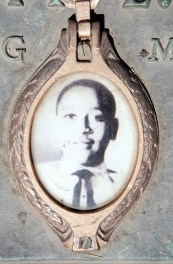
Image Credits: Scott Olsen, Getty Images, 2005
the direct result of an accusation of sexual impropriety levied against him by Carolyn Byrant-Donham, which she now admits was false (Associated Press, 2017). Freedom of speech is undoubtedly one of the greatest benefits that the United States Constitution has bestowed upon its citizens. However, with the growing polarization that is plaguing our country, how do we prevent this cherished freedom from being dangerously, even criminally abused?
Perhaps the answer actually lies within the relatively simple concept that led parents of a bygone era to adopt the, “What’s the magic word?” catch phrase in the first place. Civility was valued because it enables members of a society to work together more effectively. Kindness and compassion help individuals feel positively connected to the whole and as a result, more likely to work together for the greater good. However, in our current polarized state, bad behavior garners a greater share of national attention and the resulting fear, separation, and disillusionment are contributing to a dangerous “every person for him or herself” mentality. While my little sister’s declaration of “Abracadabra” as being the magic word all those years ago was amusing, it is important to note that she wasn’t rewarded with the object of her desire, a Hershey’s Kiss, until the real magic word, “Please” had been successfully uttered. All too often it seems that we exalt negativity and incivility by rewarding it with more and more attention, all the while making us weaker as a nation because of the widening gaps between us.
Works Cited
Anderson, E. (2006, January 4). The Plain Truth About ‘Speaking in Tongues’. Retrieved from The Trumpet: https://www.thetrumpet.com/4598-the-plain-truth-about-speaking-in-tongues
Associated Press. (2017, January 28). Emmett Till Accuser Admits to Giving False Testimony at Murder Trial: Book. Chicago Tribune.
Caruso, S. (2014, January 29). Abracadabra is NOT Aramaic. Retrieved from The Aramaic New Testiment: http://aramaicnt.org/2014/01/29/abracadabra-is-not-aramaic/
Quinion, M. (2005, December 19). Abracadabra. Retrieved from World Wide Words: http://www.worldwidewords.org/qa/qa-abr1.htm
Rowling, J. K. (2004). Harry Potter and the Order of the Phoenix. Scholastic Paperbacks.
U. S. Department of Health and Human Services. (2014). Effects of Bullying. Retrieved from Stop Bullying: https://www.stopbullying.gov/at-risk/effects/index.html
 quietlyradical