
Since turning 60 earlier this year, I’ve naturally started to think about a “bucket list”. For many people the bucket list is all about places to visit or experiences to have. But as a certified, “bookworm”, “bibliophile”, “reader” or just a straight up nerd, my life, since as far back as I can remember has been about reading. Even before I learned to read with the old Dick and Jane readers in Mrs. Leora Crispin’s first-grade class back in 1970, I can remember sitting with my mom and having her quiz me with the “Headwork” questions from “Highlights” Magazine or looking at the pictures in Ebony, (when it was full-sized, not the later shrunk down version), Look, and Life magazines.
So, I decided that instead of going sky diving or traveling around the world, I would read and review every Pulitzer Prize winning novel to see if they’ve withstood the test of time. If you’re an avid reader too, I hope you’ll take up the challenge with me and share your comments. Happy reading~
Book #1 – His Family by Ernest Poole
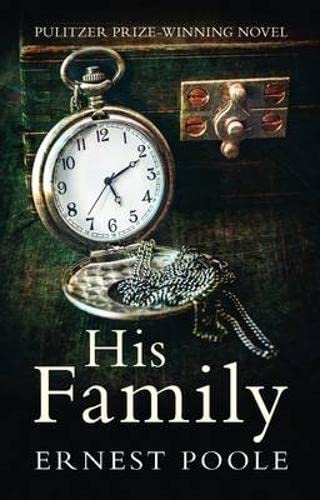
I just finished the first book on my Pulitzer Prize bucket list, the 1918 Pulitzer Prize winning novel, His Family, by Ernest Poole. The book is about Roger Gale, a widower with three adult daughters who owns and operates a newspaper clipping business in New York City.
Even though the novel was written more than 100 years ago, the conflicts among the characters and those within Roger Gale himself still seem relevant today. Gale laments not having a closer relationship with each of his daughters, a result of his having ben engrossed in the development of his business when they were growing up.
He also marvels at the differences in his daughters’ personalities and interests. Edith, the eldest and the mother of 5 children appears as the original “helicopter mom.” Roger seems both proud and conflicted over his daughter’s all-encompassing devotion to her children. Edith fulfills what most would probably consider to be the ideal role for a woman in the early 20th century. She has a seemingly happy marriage to Bruce, who although being a bit of a workaholic in his business taking over bankrupt companies, does appear to show love and support to his family. Roger shifts between his admiration for Edith’s embrace of traditional womanly values and his fear that his eldest daughter’s world is much too small and that her children are growing up to be too sheltered from the real world.
Middle daughter, Deborah, is the principal of a school for poor children living in New York’s tenements. Deborah is also devoted to the cause of women’s suffrage. Still single at age 30, Deborah’s feminist spirt is something that her father finds thrilling and disconcerting at the same time. Also, the conflicts between Deborah and Edith are not unlike the modern disconnect between career women and stay-at-home moms.
Youngest daughter Laura, wants only to live the good life. She marries a rich man and boldly announces that she does not intend to have children. This shockingly unconventional attitude puts Laura at odds with the rest of her family at times, although Roger, while finding Laura to be selfish and sorely lacking in a sense of duty and family, at times reminisces about Laura’s fun-loving nature as a child and seems to secretly admire her willingness to pursue her own happiness without worrying too much about what others may have to say.
Finally, Roger Gale’s attitude toward New York itself seems extremely familiar. He often complains about how immigrants are changing the city; he worries about his daughter Deborah’s generosity toward the poor and about his daughter Edith’s disdain for them. On the other hand, he finds Laura too selfish, but both Edith and Deborah being too selfless, each in her own way.
In a way, Roger Gale seems to embody the conflicting points of view that we see between liberals and conservatives on a larger scale today within himself and within his own family.
Overall, I enjoyed “His Family” and would recommend it.
Book #2 – The Magificent Ambersons
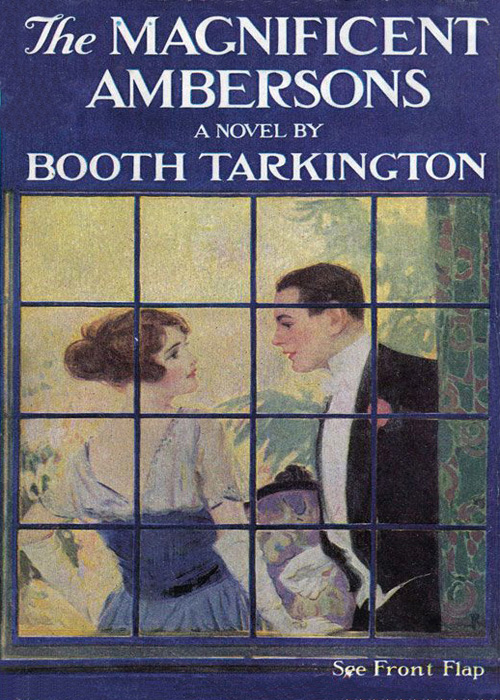
Probably the best way to summarize the book without giving away any spoilers is quote from one of the characters who says, “Nothing stays or holds for keeps where there is growth.”
The book won the Pulitzer Prize in 1919 but a lot of the themes are still surprisingly relevant. Isabel Amberson Minafer is what we would probably describe today as a “helicopter parent” and her excessive overindulgence of her only son, Georgie, doesn’t seem to serve him well in life.
The story also shows that the desire to “see and be seen” and widespread consumerism did not originate in today’s world of social media, but have existed more than 100 years. Clothes were important even though the styles were different (one of the older characters laments the fact that the young men are wearing “tight pants” in much the same way that older generations today criticize baggy pants).
Family friend, Eugene Morgan, has invented a “horseless carriage” and while his machine is mocked by young George Amberson Minafer in the early chapters of the story, Morgan is undeterred. He continues to improve the automobile and earns a significant fortune as a result of having embraced change.
Another interesting them is the changing role of women. Isabel, the devoted mother, is willing to sacrifice everything, including her own chance at happiness and true love for the sake of her son. Her sister-in-law, Fanny Minafer, begins as a lively and happy character, but eventually falls victim to the “old maid” stereotype when she is unable to marry the man of her dreams. Finally, Lucy Morgan, the daughter of automaker, Eugene Morgan, represents the transition to modern womanhood. She isn’t intimidated by young George’s sometimes rude demands, and, even though he does love him, is also determined not to sacrifice herself or her own principles for the sake of finding a husband.
Although the language is somewhat dated and politically incorrect by today’s standards, I think the story will still resonate. The overall message is that change is inevitable and if we refuse to embrace it as it comes, we may just end up losing everything.
 quietlyradical