Back in 1995, actors Morgan Freeman and Brad Pitt starred together in the crime thriller, Se7en, about a serial killer whose crimes fashioned to represent the seven deadly sins: sloth, gluttony, lust, wrath, envy, greed, and pride. The order of the sins is important; they traditionally begin with sloth, which is considered as the least offensive and then move upward in severity to finally culminate in pride, which is often considered to be the root of all of the other sins.

I suspect that some citizens of the United States might struggle with that classification, in that for as long as I can remember, people in the U.S. have carried a great deal of pride. We like to refer to ourselves as “the greatest country in the world” while unabashedly chanting, “U-S-A! U-S-A!” However, according to the biblical definition of pride which is, “excessive self-esteem and a belief in one’s own superiority” Americans are undoubtedly guilty. These days there are three offshoots of the sin of pride that are making life in the United States nearly unbearable: white supremacy, xenophobia, and misogyny.
The idea of white supremacy is not new; however, its evolution is an interesting one. In the ancient world, factors such as culture, language, architecture, innovation, and economic prosperity were the marks of a civilized society. According to these measures there were countless non-white highly civilized societies in the ancient world. Ancient China, ancient Egypt, the Kingdom of Kush, and the Empire of Mali are just a few examples. The concept of race as we know it today, which is based on skin color didn’t really exist in the ancient world. People might be separated on the basis of religion, education, or access to trade and valuable natural resources, but considering certain groups to be “better” or “more advanced” based upon nothing more than complexion was virtually unheard of.
It was only after the age of exploration began in the 15th century that “race” as a biological category began to emerge. Driven by the other deadly sins of gluttony, lust, envy, and greed, European explorers began to exploit the natural resources of the territories that they conquered and to enslave the inhabitants as a source of free labor. Since the enslavement and genocide of indigenous people placed white Europeans directly at odds with the teachings of the Christian church, they were forced to find some way to justify their actions. By propagating the narrative that non-Europeans were morally, intellectually, and spiritually inferior, colonizers leaned into the idea of “white supremacy” as a way to excuse their actions.
By the 18th and 19th centuries, scientific thinkers in the United States and Europe began to emerge. As researchers such as Carolus Linnaeus, John James Audubon and others began the formal naming and classifications of plant and animal species, there were others, like Johann Blumenbach, who set out to classify humans in much the same way. While plants and animals tended not to be viewed as either better or worse when compared to others, unfortunately, Blumenbach’s classification of humans was used to further justify the idea of white supremacy (Michael, 2017). Blumenbach based his classification system upon skin color and skull type and he did not appear to be inherently racist at the start, expressing a conviction that “…all humans were equipped with equal (intellectual and moral) capabilities, and were just distinguished by different opportunities (Johann Friedrich Blumenbach Institute of Zoology and Anthropology). Blumenbach’s one fatal error, however, was his very unscientific assertion that the Caucasian variety represented “the ideal form.” This, however, was not based upon any verifiable scientific evidence, but rather on Blumenbach’s own cultural bias. This isn’t to suggest that Blumenbach was racist. On the contrary, in the first half of the 18th century, Blumenbach’s writings were regarded as being anti-racist as he wrote:
I am of the opinion that after all these numerous instances I have brought together of Negroes of capacity, it would not be difficult to mention entire, well-known provinces of Europe, from out of which you would not easily expect to obtain off-hand such good authors, poets, philosophers, and correspondents of the Paris Academy. And on the other hand, there is no so-called savage nation known under the sun which has so much distinguished itself by such examples of perfectibility and original capacity for scientific culture and thereby attached itself so closely to the most civilized nations of the earth, as the Negro. (Blumenbach, 1795)
Later writers, however, unfortunately took a “cherry-picking” approach to Blumenbach’s work and focused upon his assertion that the Caucasian represented the “ideal form” as proof the superiority of the so-called white race as a means to support their own racist ends. As the trans-Atlantic slave trade contributed to even greater economic prosperity in the United States and the colonies of the British Empire, the need to dehumanize Africans and indigenous people grew even stronger. The Nazi Party in Germany and the Ku Klux Klan in the United States perpetuated the notion of white supremacy into the 20th century and while civil rights legislation evened the playing field for non-white people somewhat, there is still economic benefit in perpetuating the notion that non-whites are inherently “less than” those of the white race as a means of justifying lower wages and benefits in order to maximize profit in capitalist society.
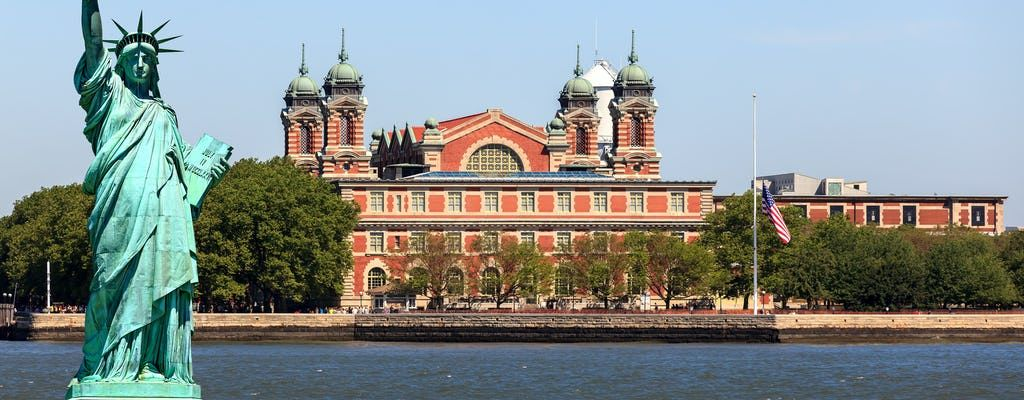
The Statue of Liberty, an iconic landmark in the United States, once signaled to the world that the USA was a nation which was, according to the poet, Emma Lazarus, a destination known for its tradition of welcoming “the huddled masses yearning to breathe free” (Lazarus, 1883). Sadly, in recent years, an epidemic of xenophobia has infected the hearts and minds of some U. S. citizens with the same relentlessness with which the COVID-19 virus infected their bodies not so long ago. The infiltration of xenophobic attitudes in the U. S. appears to be simply another arm of the White Nationalist octopus, which threatens to strangle our country in its deadly and intolerant grip. The Great Replacement Theory stems from a 2011 book by far-right French writer, Renard Camus which advanced the theory that the combination of mass immigration and the falling birthrates among white Europeans would lead to the gradual “replacement” of white Europeans by “others” from Africa and the Middle East (Brockell, 2022).

Unfortunately, prominent conservatives in the United States such as former Fox Network talk-show host, Tucker Carlson and Congressional Representative Elise Stefanik, embraced the theory and began spreading its hateful message on the western side of the Atlantic. Rather than being proud of a country that can grow and change as a result of its color and diversity, proponents of the Great Replacement narrative seem to carry an inordinate amount of pride in their skin color. The thought that the cultural norms of whiteness would no longer be the default for the U.S. has resulted in a dangerous backlash, ranging from the current POTUS’ demands that the achievements black and brown war heroes being scrubbed from the Arlington National Cemetery website to mass shootings at synagogues, mosques, a supermarket in Maryland in a predominantly black neighborhood, a majority Hispanic school in Texas, and a nightclub frequented by members of the LGBTQ+ community in Florida. Outsized levels of pride in unimportant factors like skin color, sexual orientation, or religious beliefs have provided the all too fertile soil in which the sins of wrath, envy, and greed have been allowed to grow.
Misogyny, defined as “the dislike of, contempt for, ingrained prejudice against women,” is the product of a belief in the inherent superiority of men. While this type of prejudice often receives less attention than white supremacy and xenophobia, its hold on our culture is just as strong and the motivation for misogyny against women is the result of the complex union of three of the deadly sins: greed, envy, and lust. Some men lust after power and control, and in the past, when success in the world was highly dependent upon physical strength, men were able to acquire and maintain power and control relatively easily. However, with societal advancements which made physical strength less of a prerequisite for the acquisition of power and control, men began to subjugate women in a variety of ways in order to retain their positions of power. By denying women access to education, financial independence, and civic engagement, men sought to ensure that women would remain dependent on husbands, fathers, or brothers and in a position of permanent disadvantage.
The irony of white supremacy, xenophobia, and misogyny is that the perpetrators often do not realize that the restrictions they seek to place on others actually limit their own opportunities for greater fulfillment, enjoyment, and success in their lives long term. Deriving one’s sense of self worth solely from skin color, national origin, and/or gender leads to a very shallow self-concept. White people who believe that they are inherently superior to people of color by virtue of nothing deeper than the color of their skin have little incentive to develop and grow. Their stunted self-awareness prevents them from developing the resilience needed to adequately sustain themselves during difficult times.
Xenophobia also ultimately does as much damage to the perpetrator as to the victim, although the effects are not always immediate or obvious. Xenophobes not only cheat themselves of opportunities to enrich their own lives through exposure to the richness and creativity found within other cultures, but they also set themselves up for a life that is marred by constant fear and paranoia. Viewing every person who isn’t a carbon copy of ourselves as the “other” and one who should be feared results in a life that is impaired by the constant sense of threat or competition from outsiders. Being constantly “on alert” in order to defend the status quo is likely exhausting, leading to unnecessary stress and anxiety.
Finally, while there are conflicting views on whether there is actually a male loneliness epidemic (Thomas & Kinzer, 2024), clinging to misogynistic beliefs will do little do relieve men’s loneliness. In addition, men who avoid expressing their emotions because their misogyny tells them that emotions are feminine and that femininity is inherently negative, run the risk of developing physical, social, and psychological problems as well. According to a number of psychologists, men who are disconnected from their emotions may experience physical symptoms such as upset stomach, chronic pain, racing heart and difficulty breathing. They are also more likely to suffer from depression, lack of motivation, low energy, and feelings of isolation even when they are with their partners, family members, or friends (Soelro, 2022).
While it would be wonderful if human beings could voluntarily turn away from the “sins” of white supremacy, xenophobia, and misogyny for no other reason than it is the right thing to do, the deep divide in the United States which exists as result of attacks on “wokeness” and diversity, equity, and inclusion (DEI) has shown that this is probably just a pipe dream. The Make America Great Again (MAGA) movement spearheaded by President Donald Trump has certainly revealed that this are a significant number of American citizens who wholeheartedly support not only “America First” but also have adopted a “Me and Mine First” mentality.

Instead of fighting against this, perhaps those on the left edge of the political spectrum would have greater success in combating MAGA ideology by showing MAGA the benefits THEY will receive by letting go of the idea that women, LGBTQ+ people, people of color, and immigrants are coming for them and that they need to guard against this infiltration at all costs. I think that answering the question, “What’s in it for me?” when attempting to convince those on the political right to accept the inevitability of societal change would produce more long-lasting results.
The speed with which Donald Trump was able to dismantle the civil rights gains which took decades to attain, simply shows that while legislation enhanced opportunities for marginalized groups on the surface, it did nothing to change the hearts and minds of White America. So, how can we reverse course in a more positive direction? There are a number of other countries that require some sort of national service, usually for young people between either the completion of high school and the start of university or between the completion of university and the start of their careers. Sometimes the service is military or other times it involves some type of volunteer work. What if the AmeriCorps program was revamped to provide a mechanism for young Americans from varied backgrounds provide valuable volunteer services in communities that are very different from the ones in which they grew up?

Inner city youth might develop a greater understanding and appreciation of the struggles of rural America, while those in rural red states could learn that young people of color are probably not that different from their own children and grandchildren. Young people from small towns could experience firsthand the challenges that face those living in the inner city. Perhaps the program could be expanded to allow retired senior citizens to join the volunteer teams as well in order to provide mentorship while also breaking down generational barriers as well. Finally, communities benefit from the actual work being completed through the service projects that the teams complete.
I’m sure that there are many out there who will say, “Oh Robin, you’re just a dreamer.” However, to quote John Lennon, I sincerely hope that “I’m not the only one” (Lennon, 1971).
Works Cited
Blumenbach, J. (1795). The Anthropological Treatises of Johann Friedrich Blumenbach. London: Anthropological Society.
Brockell, G. (2022, May 2). The Father of Great Replacement: An Ex-Socialist French Writer. The Washington Post.
Johann Friedrich Blumenbach Institute of Zoology and Anthropology. (n.d.). Blumenbach and the Concept of RAce. Gottingen: Georg August Universitat. Retrieved April 8, 2025, from https://www.uni-goettingen.de/en/650077.html#:~:text=Blumenbach%20explored%20the%20biodiversity%20of,humankind%2C%20but%20one%20species).
Lazarus, E. (1883). The New Colossus.
Lennon, J. (1971). Imagine [Recorded by J. Lennon]. Apple Records.
Michael, J. S. (2017). Nuance Lost in Translation: Interpretations of J. F. Blumenbach’s Anthropology in the English Speaking World. NTM. Retrieved April 8, 2025, from https://pubmed.ncbi.nlm.nih.gov/28744564/#:~:text=Johann%20Friedrich%20Blumenbach%20has%20been,varieties/races’%20of%20humanity.
Soelro, L. (2022, April 25). Why It’s So Dangerous for Men to Ignore Their Emotions. Psychology Today. Retrieved April 11, 2025, from https://www.psychologytoday.com/us/blog/i-hear-you/202204/why-its-so-dangerous-for-men-to-ignore-their-emotions
Thomas, A., & Kinzer, Q. (2024, September 20). Men Are Carrying the Brunt of the Loneliness Epidemic Amid Potent Societal Pressures. The Conversation. Retrieved April 11, 2025, from https://theconversation.com/men-are-carrying-the-brunt-of-the-loneliness-epidemic-amid-potent-societal-pressures-230354?utm_medium=article_clipboard_share&utm_source=theconversation.com
 quietlyradical