I’ve never been an “outdoorsy” sort of person, especially when the weather is hot (and in North Carolina, where I currently live, it’s hot from late April through early November.) So, one of my hot weather guilty pleasures is to watch YouTube videos of the often out-of-control school board meetings, where parents, students, and sometimes teachers gather in various communities to voice their displeasure on a wide variety of topics – from dress code to curriculum, from vaccination guidelines to cell phone policies, to whether students and teachers should be required or prohibited from wearing masks in school during cold and flu season. I am often impressed with the eloquence with which young people speak at these meetings, often outshining their elders in terms of their calm, reasoned, and generally well-researched approaches to the question at hand.
The positions of some of the parents, school administrators, and school board and/or city council members, on the other hand, are often downright disturbing. At times, the screaming, shouting, and chair throwing is reminiscent of the Jerry Springer, Maury Povich, Rikki Lake style slug fests of the 1990s. However, what I find most troublesome are the wide variety of topics that some parents wish to prevent not only their own children from learning about by insisting on opt-out policies, but also to thwart the learning of all students by banning certain topics altogether.
My son was born in 1990, so he was seven years old when the first book in J.K. Rowling’s Harry Potter series came out. We were living in Delta Township, Michigan (a suburb of Lansing) at the time and I received a note from the school librarian about the book. Parents were encouraged to read the book ourselves and sign a consent form if it was ok for our child to check out the book. I was barely through the first chapter when I found myself thinking, “This is incredibly imaginative for a children’s book!”

September 19, 1931 – April 8, 2024
I recalled being bored to tears in 3rd grade, when our teacher, Miss Raines, who, although she was probably all of forty years old at the time, everyone thought of as an “old maid’ even then, would read us the “Mrs. Piggle-Wiggle” stories. I enthusiastically signed the consent form and from ages 7 through 16, my son would anxiously await the release of each new book, which he would often read over the course of a single weekend. Some of my fondest memories with my son are of discussing the books, and later, the films (he was a very harsh critic) with him. I still have his first edition copies of the entire series. With their missing dust jackets and dog-eared pages, they are far from collector’s items; yet they remain among my most prized possessions.
Apparently, the issue which many parents had with Harry Potter, was that the inclusion of wizardry, witchcraft, spells, potions, and magic was somehow “evil” or “demonic.” While “He Who Shall Not Be Named” was undoubtedly evil and Draco Malfoy and the residents of Slytherin House were only slightly better, Harry and his friends always fought on the side of good. Additionally, all the young wizards and witches at the Hogwarts School, were being taught the safe and proper way to practice their skills and had to adhere to strict rules regarding the use of magic in non-approved circumstances.
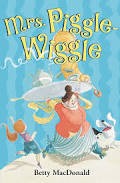
Even more ironic, however, is the fact that in the Mrs. Piggle Wiggle series that Miss Raines was reading to us in 1971 there were all kinds of references to magic. For the uninitiated, the late Mr. Piggle Wiggle was a pirate, who left his treasure chest of magical cures to his wife, who then used them to cure children of bad habits. When compared with the magic in Harry Potter, some of Mrs. Piggle Wiggle’s magical “cures” border on child abuse. For example, one story involved a little girl who didn’t like to wash and so she was allowed to become encrusted with dirt and then had radish seeds planted on her body. In another story, there is a boy who commits the crime of being an extremely slow eater and the magical “cure” for this is to feed him from progressively smaller dishes until he is too weak to function, and in another story, a boy who insults other children finds that every insult that he has uttered during the day appears as glow-in-the-dark text on his bedroom walls, depriving him of sleep until he learns to use kinder words.
Our parents never protested these books or tried to have them banned, nevertheless, nearly all of the children in my third-grade class grew up to be productive citizens without any lasting damage. (The one sad exception was a classmate from a very underprivileged home, who was involved in a tragic murder-suicide about 20 years after we were in third grade together. However, I don’t think that exposure to the “wrong kind of books” was the reason for the tragedy.)
Now, however, it seems that parents strive to “protect” their children from just about everything.
- No sex education, including, but not limited to, contraception, LGBTQ+ issues, abortion, or HIV/AIDS
- No celebration of Halloween
- No mindfulness practices like yoga or meditation (even though experimental programs in which these practices are taught have shown that children who learn these techniques are calmer, are better at conflict resolution, have more focus, and receive fewer detentions)
- No books (even literary classics such as To Kill a Mockingbird, The Bluest Eye, and Of Mice and Men) because of references to race, gender, and violence
- No standardized testing because it allegedly causes students too much stress and because of privacy concerns
- No mandatory vaccinations or health screenings
- No surveys (for middle and high school students) on topics such as drug use, sexual behavior, and family life) even though these surveys may help administrators make data-driven decisions about educational needs and provide a basis for determining funding needs for programs to educate students on the dangers of smoking, vaping, abusing alcohol, and strategies for helping students avoid being sexually assaulted or being caught up in sex-trafficking operations.
- No DEI content
- No science lessons on everything from evolution to climate change
I wonder, however, what will happen to these ultra-sheltered young people when they begin to encounter the harsh realities of the world at large? Do these measures, which some parents maintain are undertaken to “preserve their child’s innocence, really work; or do they have the opposite effect? I was raised in a Christian home; our family was active in church, but my parents were not ultra-conservative. I think my mother especially felt that if we had to be locked away from the world so that we wouldn’t “stray,” then our faith wasn’t all that genuine. My sisters and I had limits and discipline, to be sure, but our parents never tried to shelter us from the “real world” like exotic hothouse flowers. I think that Mom and Dad’s philosophy was that if our faith couldn’t withstand being tested, then it probably wasn’t that strong to begin with.
Not all “opt out” parents do so for religious reasons, but parents who attempt to “bubble wrap” their children, strike me as being not very confident in their own parenting skills. If you are teaching your children the “whys” behind the rules, encouraging open and honest communication with them on every subject, and letting them know that you are a safe harbor if they do make a mistake, is much more effective.
I don’t pretend to be a parenting expert, but I wish that parents would understand that making mistakes is how children learn and grow and if they have a solid foundation and the assurance that you will be there for them no matter what happens, most children will usually make the right choices. However, even if they don’t, they are still probably stronger in the long run. Exotic hothouse flowers are beautiful and rare, but they can’t survive for very long outside of their carefully controlled environment. Even Jesus understood the importance of letting the wheat and the tares (weeds) grow up together (Matthew 13: 24-30). Trust your children; in most cases they will do the right thing; but, even more importantly, trust yourself. Helping children develop the strength to withstand the challenges they will face after you are gone will matter more than trying to manage every aspect of their environment now.
 quietlyradical