A question I commonly receive is, “Where do you get your ideas for things to write about?” Generally, when I hear or read about a topic that is of interest to me, I jot it down and place it in a folder on my laptop. I find that there are both positives and negatives to this approach.
Life has been busy over the last several months – my husband and I sold our home and moved to Mexico. These activities left little time for writing. So, when I went to my “idea file” I found the topic, “Drag Queen Story Hour” (DQSH) as an idea I had tagged in January 2025. Although that was only eight months ago, the current controversy and chaos dominating the headlines today, the idea that drag queens reading stories to children caused controversy seems almost quaint.
However, because there is evidence that the collective memories of certain groups in the United States are notoriously short lived, perhaps it isn’t a bad idea to document topics that seem to have faded from the news cycle in recent months. So, even though this might seem like “old news” to some, I believe that it is part of a larger issue that needs to be explored. In so many ways, it seems that there is an ongoing tug-of-war between the left- and right-wing ideologies, with one side advocating for a progressive future while the other clings tenaciously to the past.
DQSH originated in San Francisco in 2015. It was the brainchild of author and activist Michelle Tea who wanted to ensure that children from LGBTQ+ families had a more inclusive and affirming library experiences. In 2017, a chapter in New York incorporated as a non-profit organization and received funding from the New York Public Library, the Brooklyn Public Library and two New York City council members. The funds went to support book giveaways and to provide training to the drag queens to ensure that they could communicate effectively with children and their parents regarding gender identity and drag.
Champions of DQSH believe that the program is important to introduce children to different kinds of people and to encourage them to accept individuality and alternative forms of self-expression. There is also the added benefit of promoting literacy in an engaging way through the drag queens’ colorful costumes and performance flair. Lastly, it is thought that children with parents or other family members who are part of the LGBTQ+ community may benefit from seeing more that heteronormative representations of people in society.
On the other hand, critics argue that young children shouldn’t be introduced to nontraditional general expression saying that it violates religious teachings and that drag queens are associated with the adult entertainment industry and are inappropriate for young children. There also seems to be the idea among some conservatives that drag queens and members of the LGBTQ+ community pose a threat toward children, even though there is no hard evidence to suggest that children are more likely fall victim to sexual abuse from members of these communities than they are from members of the heterosexual, cis-gendered people.
I’ll admit that I don’t have a lot of experience with drag shows. It wasn’t a thing when I was a kid in the 1970s nor when my son was in school in the late 1990s and early 2000s. I have never watched a full episode of the show, RuPaul’s Drag Races, because the outfits and personalities were just a bit too “over the top” for me. However, I also don’t automatically associate drag queens with sex. I always wonder whether the harshest critics DQSH have ever sat in on one of the story hours, watched a video about drag, or attended a drag show. The interaction between the kids and the drag queen in this video seems overwhelmingly positive. The kids are curious but seem open to having a respectful discussion. One child asks if Isabella is gay; but aside from that, the conversation isn’t sexual, and Isabella’s responses seem honest and age appropriate.
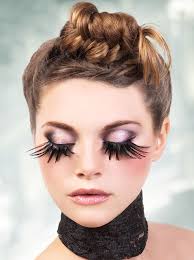
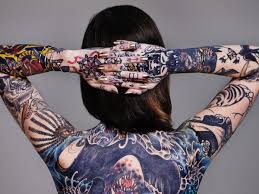
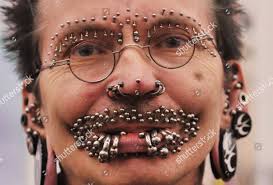
Ironically, I can recall watch daytime soap operas like As the World Turns and The Guiding Light at my grandmother’s house when I was growing up in the late 1960s and early 1970s. I suspect that the actions of the heterosexual, CIS gendered characters in those programs were far more scandalous than anything today’s children would be exposed to during DQSH. My greatest concern would be that some of the more over-the-top costumes and make-up worn by drag queens might be a bit frightening to very young children. (Although, to be fair, I find the super long false eyelashes, tattoos, and facial piercings of non-drag queens pretty frightening as well.
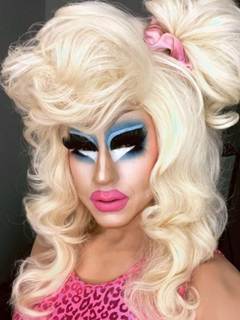
What I would really like to see, especially for opponents of DQSH, is participation in something like the Human Library Project. Like the children in the video, the Human Library Project allows people to sit down with a person with a unique background to have an open and honest discussion. It’s completely voluntary, but the one-on-one interaction would go a long way in bridging the ever-widening divide in our society. Hate is really nothing more than fear – fear of the unknown or the unfamiliar. You might even say that hate is simply fear dressed in drag.
 quietlyradical