After the shockingly horrendous outcome of the 2024 United States’ Presidential election, my husband and I made the decision to relocate to Mazatlán, Sinaloa, Mexico. While there are many challenges associated with beginning life anew in a country that is not our own, I have found that, so far, the benefits far outweigh the inconveniences. One of the unexpected perks has been embracing a variety of different holidays and cultural traditions. So, we are currently celebrating our first “El Dia de Los Muertos” or “The Day of the Dead” here in Mexico on November 1, 2025.
In the United States, for reasons that remain somewhat unclear to me, Halloween had begun to take on epic proportions in recent years, even among adults, with elaborate decorations complete with lights, synchronized music, and animatronic elements, as well as costumes and parties for children, pets, and their respective parents on a scale usually reserved for Christmas or New Year’s Eve. When my son was young, I enjoyed helping him choose a costume and then going trick-or-treating, sometimes in our neighborhood or sometimes at the mall since the state of Michigan where we lived when Aaron was aged 7 – 14 (prime trick-or-treating years) was apt to experience an early snowstorm on October 31st.
Sadly, however, my son began to experience serious mental health issues in his teenaged years and on June 14, 2014, I received the knock on the door that every parent dreads. My 23-year-od son, off his medication for schizoaffective disorder, had taken his own life, found hanging in the bathroom of a Red Roof Inn in a sketchy part of town.
Unfortunately, there was a house in my neighborhood where a family of Halloween enthusiasts lived and that first Halloween after my son’s death, I was horrified to see that their Halloween yard display featured several “hanging men” in the trees. Just three and a half months after the death of my son, those decorations sparked a feeling of panic in me that briefly took my breath away. The Griefshare newsletters provided to me by the funeral home that handled the arrangements for my son included an article which described my feelings at that moment perfectly, “Shock is a sudden, violent disturbance to the body. The same term is used to describe the effect of an electric current passing through the body.” As a child I once suffered a mild shock from a faulty electric alarm clock – there was a jolt, an unpleasant tingling, followed by a period of numbness. Aaron’s suicide and the neighbors’ Halloween display brought back the same sensations – the only difference being that the shock from my 1970s “Happy Face” alarm clock was physical and this new jolt, followed by unpleasant tingling and numbness was psychological.
Interestingly, however, El Dia de Los Muertos celebrations here in Mexico have not left me with the negative feelings that Halloween once did. For those unfamiliar with the holiday, I would highly recommend the 2017 Disney animated feature, Coco.
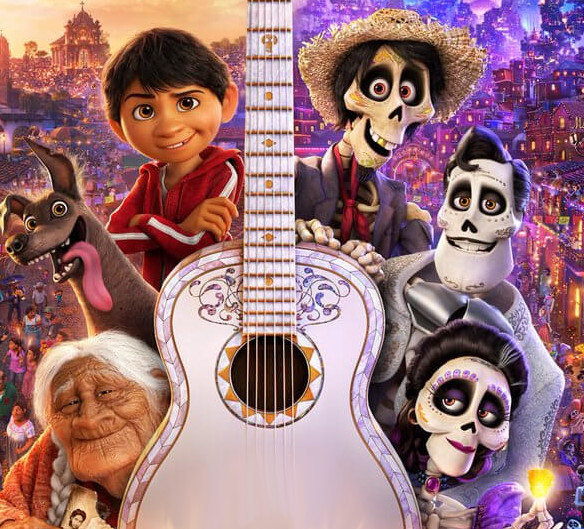
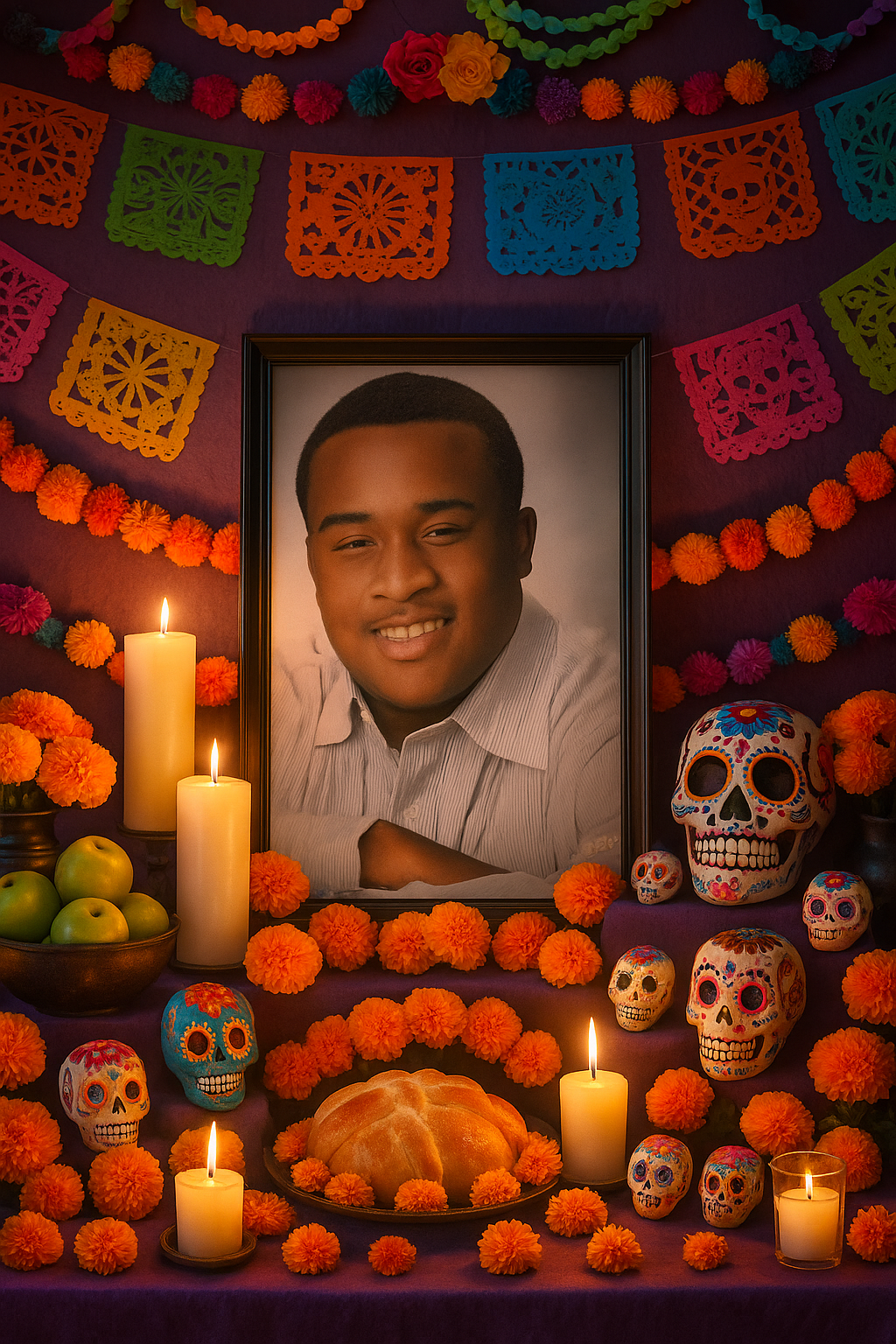
Mexicans believe that the dead never die as long as there are people among the living who remember them. El Dia de Los Muertos is the day when the spirits of dead are allowed to return to the earth to visit and celebrate with their family members. Families construct ofrendas or altars in remembrance of their loved ones which include a number of elements, each with special meaning, Photos of the deceased, marigold flowers, water, sugar skulls, bread, water, candles, and incense are just some of the elements that may be included. Families also may go to the cemetery for a picnic with their deceased loved ones. The atmosphere is one not of sadness, but rather of nostalgia and joy. Making sure that those we have loved live on in our memories is a precious gift that we can share with them.
When Aaron died, I recall one of my friends remarking that when our parents die, we are orphans; when our spouses die, we are widowed; but the death of a child is so horribly unnatural, there isn’t even a word for it. When a child dies by his own hand, a parent’s grief is complicated even further, becoming an awful swirling mixture of sadness, anger, and sadly ostracism from other parents who behave as if losing a child to suicide is contagious, like COVID or HIV.
So, while Halloween “celebrations” as they occur in the U.S. filled me with dread, I do not experience this same negative emotion here in Mexico. While I will never “get over” the loss of my son, I am now able to recall his brief life with an appreciation for both the joy and the sorrow. Again, according to Griefshare, “The grieving process is not so much a matter of getting rid of the pain, but not being controlled by it.”
 quietlyradical