Why do people from the United States have such short memories? Many Americans, especially those who self-identify as “fiscal conservatives” will rail against social welfare programs such as Medicaid, SNAP, and the Affordable Care Act Health Insurance subsidies. They complain that the programs are too expensive and that many of the people receiving the benefits are “undeserving.” They lecture their fellow Americans about the need for “personal responsibility” and the virtue of “pulling yourself up by your own bootstraps.” There is this faulty assumption that the beneficiaries of social welfare programs are lazy or crooked or both and that the long-suffering American taxpayer is being abused and put upon by these ne’er-do-wells.
Even if this dim view of poor people in the United States were true (it’s not), I often wonder why these folks never think to look back into our country’s history for a view of what life was actually like before social welfare programs were put into place.
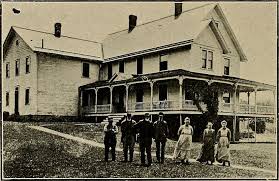
When I was a little girl growing up in the 1960s and early 1970s, I used to hear my grandparents talk about “the poor farm” and how ending up there was viewed as a fate worse than death. My grandparents related horrific stories of unfortunate neighbors with no family and no means of support who were relegated to this awful existence comprised of crowded conditions, inadequate food, lack of privacy and personal freedom, and the stigma and shame associated with being sent to such a place. Widowed mothers who were able-bodied enough to work on the poor farm sometimes lost custody of their children who were sent to orphanages and there were not special provisions for the elderly, the physically disabled, and the mentally ill. Fortunately, the advent of the Social Security Administration in the mid-1930s lessened the need for “poor farms” with most closing by the 1950s.
Before Medicare and Medicaid, a major illness could spell financial ruin for an elderly or low-income person. Many people relied on home remedies or illnesses simply went untreated. Life expectancy for people aged 65+ increased steadily after Medicare was implemented in 1965 and Medicaid enabled low-income mothers to have access to prenatal care and resulted in improved infant mortality rates.
As Trump’s “big, (not) beautiful bill” threatened to curtail nutrition programs such as SNAP and WIC, why did it seem that everyone had forgotten that no so long ago, malnutrition-related diseases such as pellagra, rickets, and scurvy were commonplace in the so-called “richest country in the word.” In 1968, a CBS documentary called Hunger in America, revealed that there were children the United States with the same distended bellies usually seen in starving children in third world countries.
Finally, although some help was available through religious organizations and private charities, there were often strings attached. Before receiving aid, people were often subjected to home inspections and moral surveillance to determine if they were “deserving” of help. Churches might require church attendance or adherence to strict behavioral guidelines before rendering aid.
I wish that there were some method of reminding the United States citizenry that social welfare programs aren’t just a box of “freebies” given to those without the wherewithal to take care of themselves, but rather hard-won responses to real suffering, visible within living memory. Poor farms, untreated illness, child hunger, and conditional charity are not distant relics of some ancient past; they are part of our national story, one that shaped the very programs now under scrutiny.
We do not honor personal responsibility by ignoring history, nor do we strengthen society by pretending that hardship is always a moral failing. If anything, the lessons of the past suggest the opposite: that a stable, humane society requires a baseline of care that allows people to survive, recover, and participate with dignity. The question, then, is not whether we can afford these programs, but whether we can afford to forget why they were created in the first place.
A nation that forgets its past risks repeating it—and for those who once faced hunger, illness, or the threat of the poorhouse, that is not an abstract warning. It is a memory worth holding onto.

